Product Description
Acetic Acid Glacial (For Molecular Biology) contains a very low amount of water (less than 1%) is called anhydrous (water-free) acetic acid or glacial acetic acid. The reason it's called glacial is because it solidifies into solid acetic acid crystals just cooler than room temperature at 16.7 C, which ice. Glacial acetic acid is colorless and is very corrosive. The acetic acid is a colorless, liquid acid (CH3COOH), with a pungent smell and sour taste. Acetic Acid Glacial (For Molecular Biology) is very effective.
Assay : Min. 99.7% CH3CO2H M.W. 60.05, Liquid, d. 1.05
Exceptional Purity for Sensitive ApplicationsWith a minimum assay of 99.7%, Glacial Acetic Acid ensures reliable results in molecular biology laboratories. Its high-grade formulation supports critical techniques like DNA and RNA extraction and precise buffer preparation, making it indispensable for molecular research.
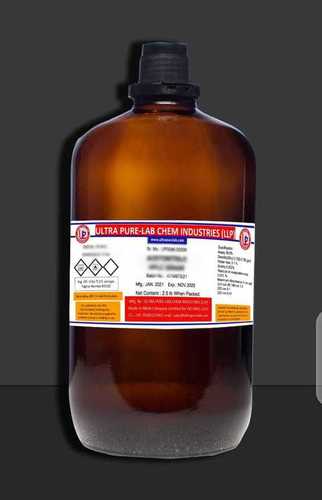
Safe Packaging and Long Shelf LifePackaged in both glass and HDPE bottles, this reagent is easy to store and transport. When kept tightly sealed at room temperature, it maintains stability and usability for up to 36 months, minimizing waste and ensuring laboratory efficiency.
Convenience and Versatility in UseAvailable in various sizes (100ml, 500ml, 1L), Glacial Acetic Acid adapts to laboratories of all capacities. Its miscibility with water and consistent pH characteristics make it a versatile choice for numerous molecular biology applications.
FAQ's of Acetic Acid Glacial (For Molecular Biology):
Q: What are the common uses of Acetic Acid Glacial in molecular biology laboratories?
A: Acetic Acid Glacial is widely used in molecular biology labs for DNA and RNA extraction, buffer preparation, and as a reagent in various molecular assays due to its high purity and consistent results.
Q: How should Acetic Acid Glacial be stored to ensure product integrity?
A: Store Acetic Acid Glacial tightly sealed in its original glass or HDPE bottle at room temperature. Proper storage prevents contamination and evaporation, preserving its quality throughout its 36-month shelf life.
Q: What precautions should be taken while handling Glacial Acetic Acid?
A: Because it is classified as a corrosive (Hazard Class 8) and has a pungent odor, always handle Glacial Acetic Acid in a well-ventilated area while wearing appropriate protective clothing, gloves, and eye protection.
Q: Why is this product suitable for molecular biology applications?
A: Its molecular biology grade and high purity (99.7%) ensure that it does not introduce contaminants during sensitive experiments, making it ideal for high-fidelity DNA/RNA work and buffer preparation.
Q: What packaging types are available for Glacial Acetic Acid, and how does this benefit laboratory workflow?
A: It is available in glass and HDPE bottles in 100ml, 500ml, and 1L sizes, allowing flexibility in usage and minimizing excess waste according to laboratory size and application frequency.
Q: Is the transportation of Acetic Acid Glacial regulated, and what is its UN Number?
A: While classified under UN 2789 (corrosive substances), Acetic Acid Glacial is not regulated for transport when packed in limited quantities, simplifying its logistics and handling.









 Send Inquiry