Product Description
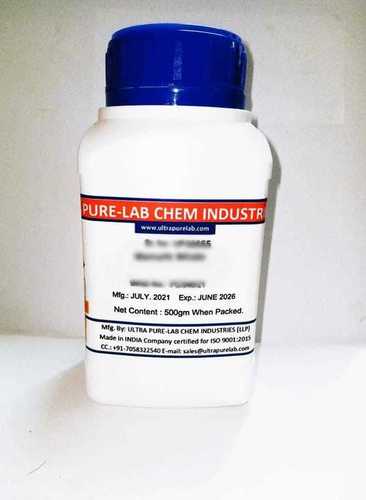
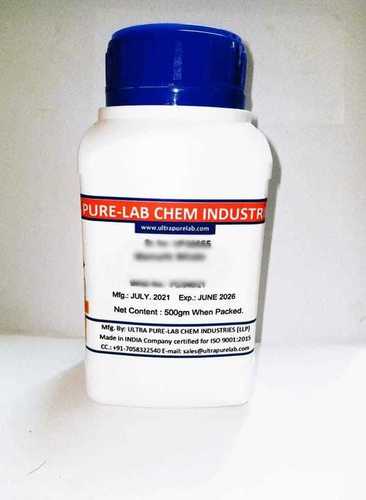
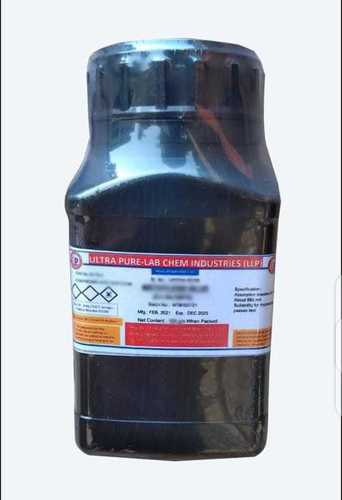
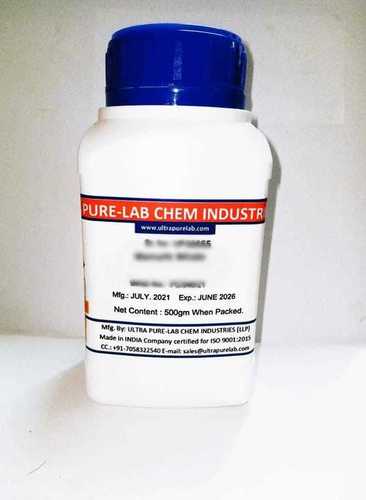
Quinaldine Red Indicator is an industrial class compound that is available in purest form with high purity of up to 100 percent. It is commonly used in various industrial applications as a pH indicator dye that changes color in response to changes in the pH of a solution. It has a chemical formula of C20H20N2O3S with a molar mass of 430.333 grams per mol. Quinaldine Red Indicator can also be used as an indicator for the determination of rare earth metals. It is available different sizes sealed plastic bottles. The offered industrial compounds can be delivered to our customers with an assurance of fast and safe delivery.
Precision Laboratory IndicatorQuinaldine Red provides sharp transition sensitivity within the acidic pH range, making it a preferred choice for educational demonstrations and analytical procedures. Its visual color change from red to colorless between pH 1.0 and 2.2 offers clear endpoint detection in titrations and experiments.
Safe Storage and HandlingTo maintain efficacy, Quinaldine Red should be stored in a tightly closed bottle or plastic container kept cool and dry. Always handle with care, using gloves and adequate ventilation to avoid direct contact with skin and eyes. The product is stable and non-hazardous for transportation.
Flexible Packaging for Every NeedAvailable in a variety of sizes, commonly 25g, 100g, and 500g, Quinaldine Red accommodates different laboratory and classroom requirements. Each pack is labeled with complete safety and usage information, ensuring simple integration into your chemical inventory.
FAQ's of Quinaldine Red Indicator:
Q: How is Quinaldine Red Indicator commonly used in laboratory settings?
A: Quinaldine Red Indicator is primarily employed for pH determination and oxidation-reduction titrations in academic and research laboratories. It provides a distinct color change from red to colorless in the pH range of 1.0 to 2.2, facilitating accurate endpoint detection during experiments.
Q: What are the storage recommendations for Quinaldine Red?
A: For optimal stability and effectiveness, Quinaldine Red should be stored in a tightly closed container in a cool, dry place. Proper storage can extend its shelf life up to 2-3 years, preventing degradation and contamination.
Q: What safety precautions should be followed when handling Quinaldine Red?
A: When using Quinaldine Red, avoid direct contact with skin and eyes, and always handle it with gloves and in a well-ventilated workspace. Although not regulated as a hazardous material, standard laboratory safety practices are advised.
Q: Where is Quinaldine Red Indicator manufactured and supplied from?
A: This indicator is produced and distributed by exporters, manufacturers, suppliers, traders, and wholesalers in India, supporting reliable sourcing for laboratory and educational institutions worldwide.
Q: What are the benefits of using Quinaldine Red as an indicator?
A: Quinaldine Red offers high sensitivity, a clear color transition in acidic conditions, and stability under proper storage. Its indicator grade purity (95%) ensures precision and reliability for both teaching and analytical purposes.
Q: When does Quinaldine Red undergo a color change?
A: Quinaldine Red changes from red to colorless as the solution transitions through a pH range of 1.0 to 2.2, signaling the presence or strength of strong acids during titration or analysis.
Q: What is the recommended process for preparing a Quinaldine Red solution?
A: To prepare a working indicator solution, dissolve the powder in ethanol to achieve the desired concentration, typically a 0.1% solution, as it is only slightly soluble in water. Use the freshly prepared solution to maintain sensitivity and accuracy.









 Send Inquiry